Candidate Marketing
Candidate-led business development
Use standout candidates to open new client conversations. Learn how to identify the right talent, build a credible speculative approach, present them professionally and follow up without damaging the relationship.
5 min read
Candidate-led business development
Candidate-led BD means using a strong candidate, as the reason to open a new client conversation. This guide covers spotting the right candidates, building the speculative approach, presenting them so the client says yes, and following up without turning into the recruiter everyone dreads hearing from.
What is candidate led BD?
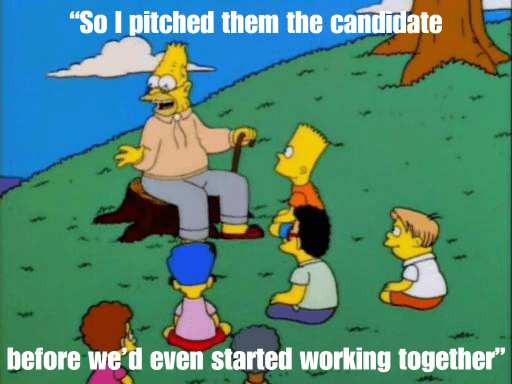
It's a tale as old as time, and one veteran recruiters will always want to tell. The time they spec’d in a candidate to a new client before they had a role with them and walked away with a placement.
With so many intent signals available to a recruiter, it is often easy to focus on sourcing new business by focusing on the hiring managers that you know are in the market today. However, not every vacancy is advertised, and sometimes all it takes is for a prospect to have the right candidate put in front of them for them to create a role.
It works because cold outreach asks a hiring manager to trust you before they've seen anything, whereas this approach helps to give you credibility straightaway. It also gives prospective clients some food for thought. They might not be looking today, but now they know the calibre of talent you work with, they might want to hire them tomorrow.
Spotting the candidates worth leading with
Not every candidate on your books is worth leading with. The ones worth building a BD play around are the genuinely strong performers: proven track record, good communication, actively seeking a new role and rare enough in your market that a hiring manager would want to move quickly.
This takes two things working together. The first is your relationship with the candidate themselves, built over calls and meetings, so you actually know what makes this candidate good rather than just what their CV says. The second is knowing where the gaps are: which skills are short in your sector right now, checked against your own database for candidates who fill exactly that gap.
When both line up, you've got what's worth calling a most placeable candidate: someone strong enough, and rare enough, to be the reason a new client takes your call. This is the kind of gap Paiger Intelligence's Outreach Angle is built to surface, though the relationship side of it only ever comes from actually knowing your candidates.
Building the speculative approach
The speculative call is where most recruiters get nervous, because it feels like selling rather than recruiting. Reframe it: you're not selling a service, you're offering a solution to a problem the hiring manager may not know they have yet.
Lead with the candidate, not with your agency. "I've got someone who [specific, relevant strength] and I think you'd want to see them" lands better than any pitch about your agency's coverage or fees. This isn't a hot job you're trying to fill, it’s a hot candidate you're trying to place. The pitch needs to reflect this, whilst getting across exactly why they would be a good fit.
Have the supporting material ready before you pick up the phone. A branded candidate advert or a well-formatted CV to send straight after the call keeps the momentum going, rather than leaving the hiring manager to chase you for it a day later.
Presenting the candidate so the client says yes
This is the part that separates a good speculative approach from a wasted one. A strong candidate presented badly undoes all the work of the call itself: a messy CV, an inconsistent format, a generic covering note.
The presentation needs to do three things:
It should show the candidate's relevant experience clearly
Give the hiring manager everything they need to say yes without a follow-up email asking for more detail.
Look like it came from a professional agency rather than a template downloaded years ago
This is where Paiger’s Candidate Marketing earns its place in the workflow. One-click branded CVs and spec emails mean the presentation matches the quality of the candidate every time, rather than depending on whoever on the desk is free to knock one together that afternoon. The anonymisation tools also mean you can spec that candidate with only the relevant info on display.
Following up without being that recruiter
Every recruiter has been on the other end of a follow-up call that felt like being chased. Don't be that recruiter. One follow-up within a few days is reasonable. Three follow-ups in a week is not.
Give the hiring manager a reason to reply rather than just a reminder that you exist. A second candidate who fits the same gap, a piece of market context, or a direct question about timeline all work better than "just checking in." Handled well, this is sometimes the play that gets you onto a client's PSL without ever going through a formal tender.
If it doesn't land this time, the relationship isn't wasted. Log it properly, note what they said, and come back when you've got something else worth their time.
Doing it properly, every time
Candidate-led BD is a genuinely useful play, but it only works if the presentation holds up and the follow-up doesn't grate. Get those two things right and it's one of the most efficient ways to open a new client relationship on the desk.
Branded CVs, spec emails, and candidate adverts in one click. That's what Candidate Marketing is built for, so the quality of your candidate-led approach never depends on how busy the desk is that week.
And remember, a great candidate poorly presented is a missed placement.
Business Development
Watch your market for funding, hires and moves, then hand each consultant a Day Plan with the outreach already drafted.
Candidate Marketing
Reformat CVs to your brand, write the candidate framing, and build presentation packs that get your shortlist taken seriously.
Personal Brand & Content
Every consultant posting in their own voice, without chasing. The reach that wraps the other two.
Candidate Attraction
Every consultant’s vacancies on your website go out as branded adverts on their own LinkedIn, automatically — every role, every time.
More insights from Paiger
For more insights from Paiger, make sure you’re following us on LinkedIn.